Aurora chasing: Part I

Part one in a series of posts about Iceland.

I always find it hard to articulate why it is that I keep returning to Iceland. I’ve been to some amazing places in my time; the Lake District, New York City, Barcelona, the Cayman Islands, but none of them has quite the same effect on me that Iceland does. I’ve seen the same in other people, so I know it’s not just me – as a rational, scientific thinker I hesitate to use spiritual metaphors, but this volcanic north Atlantic island does seem to have something about it that bewitches people, meaning that every time you go, you just want to return even more.

The Mýrdalsjökull glacier, seen from the cliffs at Dyrhólaey

What doesn’t help is that the locals are some of the loveliest people I’ve ever encountered, and having made friends with several of them on Twitter, and met them in real life in my last few visits, I now have what feel like family ties pulling me back each time.

In February 2012 I travelled to Iceland for the eighth time, third time within the space of two years. The aim was two-fold; to go on my own and hence be free to get up at ungodly hours and stay up until ungodly hours, and to try to capture the aurora on camera, something I had singularly failed to do in all my previous visits.

My previous visit, in which I was photographing the Iceland Airwaves festival in 2011, was actually only the first time I ever got to witness the aurora first hand. I was walking on the harbour front in Reykjavík with Tim and James, my two colleagues from The 405 who were covering the festival with me, when we saw what looked like a cloud move in an unexpected way. We knew straight away what it was, and the three of us spent the next ten minutes staring into the northern sky with our mouths wide open as solar particles bombarded the upper atmosphere, ionising oxygen atoms, which glowed like green and pink cosmic curtains gently blowing in the solar wind.

So from that moment I determined that the next time I went to Iceland I’d do my best to capture this spectacular phenomenon on camera.

A brief introduction

Iceland is one of the most recent additions to the Earth’s geology. It was formed around 20 million years ago by volcanic eruptions at the boundary between the North American and Eurasian tectonic plates, known as the mid-atlantic ridge. As a result of its relatively young age, it consists almost entirely of volcanic rock, and signs of the huge gash in the earth’s crust are everywhere, in particular at Þingvellir National Park, (‘Thingvellir’), site of the world’s oldest democratically elected parliament.

Þingvellir national park, where the Icelandic parliament (Alþingi) was founded. Now based in Reykjavík, the Alþingi is over 1,000 years old.

For many millennia Iceland was covered by glaciers, leaving behind magnificent fjords as the ice retreated. Nowhere are these more in evidence than in the far north west, where the Western Fjords sit like antlers on some strange mythical beast swimming in the north atlantic ocean. Remnants of the ice age remain in the shape of Europe’s largest glacier, Vatnajökull (the water glacier), and several smaller cousins, including the infamous Eyjafjallajökull, named after the mountain range that overlooks the Westman Islands to the south (eyja = islands, fjalla = mountains).

Eyjafjallajökull glacier, as seen on the scale model of Iceland in Reykjavík City Hall.

Iceland was first named by the viking explorer Flóki Vilgerðason, who took the nickname Hrafna-Flóki (Raven-Flóki). He suffered a very cold winter at Barðaströnd in the Western Fjords, and as the drift ice floated up the fjords he named the land Ísland (literally, land of ice). The name stuck, and even to this day gives the impression of a much harsher environment than actually exists on a land benefitting from the warming effect of the Gulf Stream.

The Norwegian Ingólfur Arnarson is widely considered to be the first person to have settled on Iceland for good. The story goes that he threw two pillars into the sea as he approached the island, and followed the coast until he found them on the northern edge of the south-western peninsula now known as Reykjanes. He named the area Reykjavík, which means bay of smoke, after the steam rising from the land due to geothermal activity which can still be spotted in places throughout Iceland today.

Read Part II here.

Hard sell

I know there are several people who like my photography; the Facebook ‘like’ button shows me there are at least 112 of you. But I’m in this business to make money, as otherwise I won’t be able to spend the time I do taking photographs, and there will be less stuff to like. I’m not going to beg – that is undignifed and unnecessary. I’m not going to chastise you – that would be counterproductive. But I am going to point a few things out that may not be immediately obvious.

If you want to use my photography on your site, that’s fine, but please get in touch and we can agree a price. The chances are the people who use your site are not there to buy photographs, so even if my photos are seen by thousands of pairs of eyes on your hugely successful site, there is no direct mechanism to convert those views to sales, nor any incentive, so a credit and/or a link to my site will not be enough. In fact a credit is the minimum I’d expect for even a paid photograph.

If you want to share my photographs with others, that’s fine by me. I don’t have a problem with people coming to my site to see what I do, as it increases the chances that someone will buy something, or hire me for a photoshoot. However, I reserve the right to decide by which mechanisms you share my photographs. Sadly there is little I can do to prevent Tumblr being used to reproduce my images en masse, however you may notice that you can’t use Pinterest to share an image from this site. Similarly, several of my images are available on Flickr, where there is a link to licence the images from Getty, so I have an (albeit small) incentive to share my best work there as widely as possible.

But you probably already know all this (however if you didn’t, I hope it’s been useful to know). As it is, I do have one final request to make, and this goes out to those of you who are also photographers. Please, please, please, DO NOT undersell yourself as a photographer. If someone wants to use one of your photographs for a website, or a magazine, or some other commercial use, don’t assume that by getting your name in print they are doing you a favour. As I mentioned above, this will not raise your profile as a paid, serious photographer – the people who see your photograph are not necessarily going to be the same people who would want to buy it; your customer is the person who uses the image. In fact, if someone DOES request the use of your photograph, you can quite reasonably argue that merely by their having found you, your ‘exposure’ is good enough already, and does not need the mythical boost that such people promise. The more photographers demand to be paid for their efforts, whether amateur or professional, the harder it will be for us to be exploited, and the less ‘acceptable’ it will be to try to obtain photography for free.

Andrew Butler EP Launch

Nascent folk label Folkroom Records held their first ever launch event last night at the Queen’s Head in London, to mark the release of Andrew Butler’s EP  ‘February 14th’. A wonderful little pub ended up very busy, and rightly so, for we were treated to a delightful evening of acoustic stringed instruments and their singers (or was it the other way round?).

Head on over on 29th for the next Folkroom event. You won’t be disappointed.

A leap into the void

As I’ve mentioned before, 2012 marks the year when I start up as a full-time professional photographer, and so as much a cliche as it sounds, the end of 2011 really is the end of an era for me (unless it all goes horribly wrong and I have to find paid employment again). It was also the year of the gig shot, with around 40 concerts and a couple of festivals. I have to say thanks to Oli, Tim and James at The 405 for the opportunities they’ve given me, and also Gary at Drowned in Sound and Jenny at Counterfeit, who have also both played their part. In addition, there have been numerous PR people and promoters who have helped me get to see some of the most exciting new acts around, and special mention should go to Kamilla at Iceland Airwaves and her gang for being really helpful in getting us all to Reykjavík.

I have also visited Switzerland, the Shetland Islands, and the Lake District, and special mention should also go to my hosts Simon in Zürich (who is now in Brussels) and Frances in Shetland.

Finally, thanks to my many friends who have supported and encouraged me throughout the year. You know who you are, so I won’t name you as I’ll only forget someone.

Anyway here is an end-of-year round-up of my favourite images from this pivotal year. Hope you enjoy them as much as I enjoyed taking them.

God Will Be Relieved

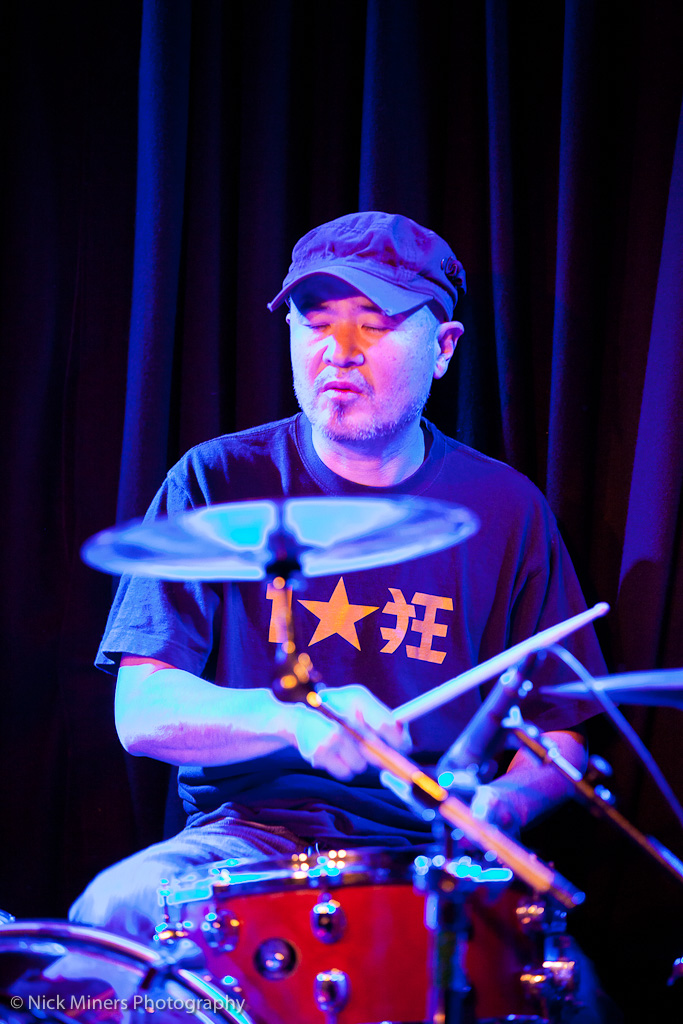
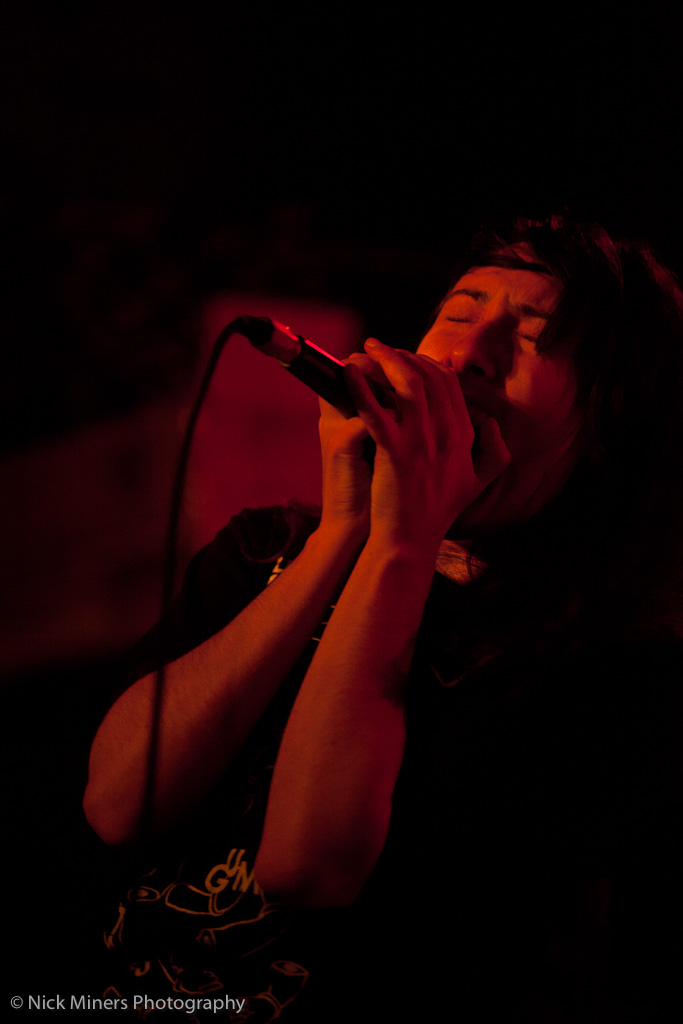
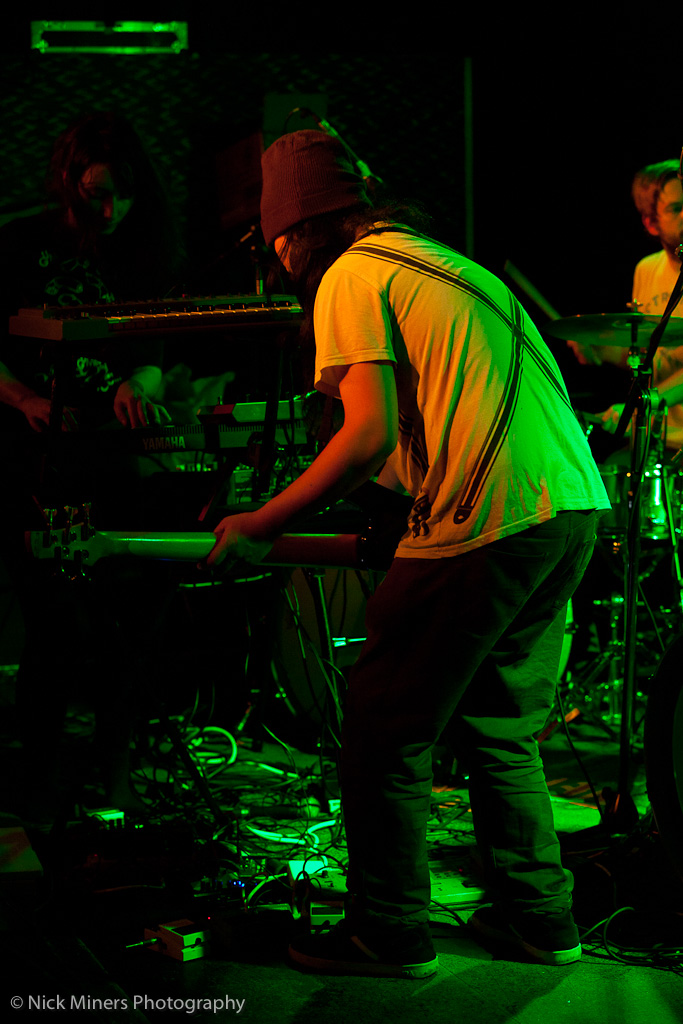
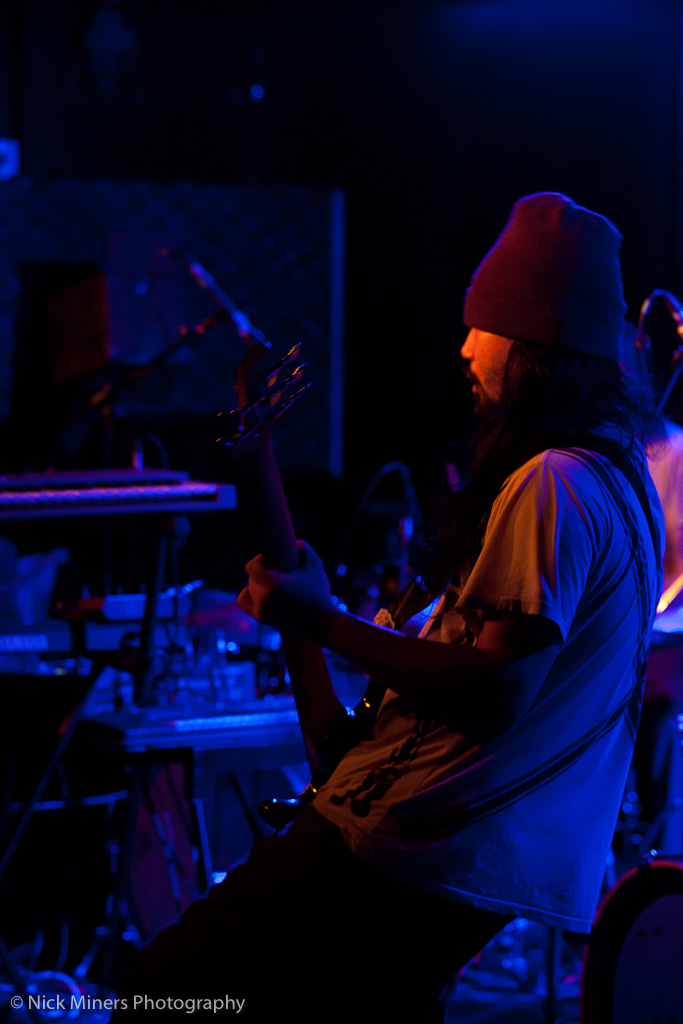
God Don’t Like It, run by Anthony Chalmers, is putting on a series of farewell shows this week as Anthony looks to pursue other interests and draws a close to the GDLI name. The first of the three shows at the Lexington in London featured Drum Eyes, an immensely noisy band who feature no fewer than three drummers, supported by the similarly noisy weirdness of Christmas Gimp.